

The Atlas Shrugged Essay Contest – How to Win


The Atlas Shrugged Essay Contest – How to Win
The Atlas Shrugged Essay Contest is a dream come true if you are a high school student who loves literature that explicitly addresses philosophical ideas. This competition gives young minds the chance to read Ayn Rand's 1957 dystopian novel, Atlas Shrugged and write an essay about it. Besides, winners and runners-up are awarded cash prizes from a pool of $30,000 or more, and earn recognition for their writing, argumentative skills, and ability to engage with the philosophical ideas in the novel.
This post provides a short summary of the novel, details about the competition, and advice on how to write a winning essay.
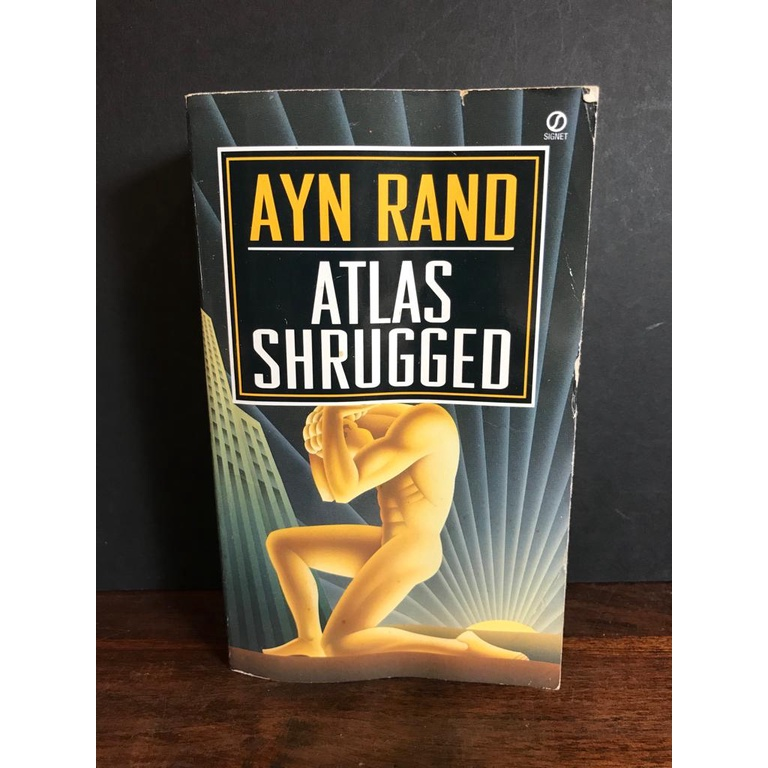
Atlas Shrugged: The Novel and the Author
Atlas Shrugged is set in a future United States on the verge of economic and industrial collapse. This is due to extensive government control of the initiatives of businesses and creative citizens (scientists, artists, industrialists). The book’s main character, Dagny Taggart, grapples with the challenges of managing a railroad company amid the mounting pressure exercised by the government and its bureaucratic demands.
Through its plot and characters, Atlas Shrugged enacts issues often addressed in philosophical inquiry such as the nature of human happiness, the value of laissez-faire capitalism, individualism and the limits of collectivism. The philosophical content of the novel is so dense because Ayn Rand saw herself not only as a novelist but also as a philosopher who conveyed her ideas through fiction. Her ideas now constitute a philosophy in its own right called ‘objectivism’. Objectivism has been highly controversial as a philosophy since it appears to value self-interest and individualism, rather than altruism and collectivism, as the key to human progress and happiness. It is, perhaps, due to objectivism’s controversial claims that Atlas Shrugged can generate new and original essays through the contest.
Atlas Shrugged: The Contest
This essay contest is organized by the Ayn Rand Institute and has awarded over $2 million in prizes over more than 30 years. The contest runs four seasonal entry rounds per year, each with its own unique essay prompts. Students may enter any or all rounds — entering multiple rounds gives you more chances to place.
Each essay must be 800-1,600 words, written in English, original and unpublished, and include page citations for any quoted material. Submission is done through the contest dashboard on the ARI website after registering (free).
Typical seasonal deadline windows (exact dates shift year to year — check aynrand.org for the current cycle):
- Summer round: closes around June 14
- Fall round: closes around September 20
- Winter round: closes around December 27
- Spring round: closes around April 30
Prize structure per seasonal round:
- 1st place: $10,000 (also advances to compete for the Annual Grand Prize)
- 2nd place (x3): $2,000 each
- 3rd place (x5): $1,000 each
- Finalists (x25): $100 each
- Semi-finalists (x50): $50 each
Annual Grand Prize: the four seasonal first-place winners compete for a Grand Prize of $22,000. Total annual prize pool: $30,000 and above.
Essays are judged on clarity, logical organization, and the strength of the argument — not on whether the judges agree with your position. After submission, some candidates may be invited to an interview. It's worth re-reading your essay and reviewing critical material about the novel after submitting, so you can speak to your arguments fluently if contacted.
The Atlas Shrugged Essay Contest attracts a high volume of candidates every year. It is very competitive since the panel consists of high-profile academics and professionals who select only three winning essays among thousands of entries. Winners of this contest often attract the attention of selective colleges and universities because the contest champions the ability to analyse literary texts, engage with complex ideas, to develop convincing interdisciplinary arguments at the interface between literature and philosophy. Past contest winners have gone on to attend Stanford, Cornell, and other highly selective universities — the contest's combination of philosophical depth and argumentative rigor is exactly the kind of intellectual engagement selective admissions offices notice.
Tips on How to Write a Winning Essay for the Atlas Shrugged Essay Contest
1. Read the novel at least twice
Before writing your essay, ensure you understand Atlas Shrugged thoroughly. You may need to read it twice since a second reading helps to notice details that may be overlooked when reading a text for the first time. If you do not own a copy of Rand’s novel, you will be able to access a digital copy, as well as the essay prompts, when you register for the competition.
2. Choose a topic that interests you and read criticism about the novel
To write an essay that could win the contest, you need to choose the prompt that interests you the most. Since Atlas Shrugged is a best-selling novel that has generated a large body of critical responses by academics and scholars, you can then start reading these as well. They can be accessed through academic databases such as JSTOR and Google Scholar. Google Scholar is free and openly available. JSTOR offers a free account tier that gives access to up to 100 articles per month — you don't need a university login to use it. Create a free account at jstor.org and search for "Atlas Shrugged," "Ayn Rand," or "objectivism" to find relevant critical essays. Reading criticism is important because it will highlight issues to be discussed, provide models of good academic writing, and, most importantly, reliable sources to be cited in your essay.
3. Have a strong thesis and include counter-arguments
Your essay should take a clear stand (your thesis). A good thesis is like a riddle; it makes the reader think; it may even provoke them and cause them to disagree with your stand. However, by approaching this from different standpoints and addressing counterarguments (opposing views), you will gradually enable the reader to see your thesis’s validity and strengths.
4. Review your work for consistency, punctuation, and grammar
After finishing your draft, or after every partial draft, take a break. This will enable you to review it with a clearer mind and to spot typos, grammatical errors, and unclear passages. Try reading your essay aloud as well; it is an effective way to notice awkward phrasing or sentences that are hampering the flow of your writing.
5. Don't Fall Into the Objectivism Trap
The single most common mistake students make in this contest is assuming they need to agree with Ayn Rand in order to win. They don't.
The ARI's judging criteria state clearly: essays are evaluated on whether the student can argue for and justify their view — not on whether the judges agree with that view. The panel is looking for analytical rigor, not philosophical alignment. An essay that builds a precise, well-evidenced argument against a claim in the novel can win just as easily as one that endorses it — sometimes more easily, because a strong dissenting argument requires a deeper engagement with the text.
What this means practically: if you choose a prompt and find yourself writing something like "Rand is right that..." followed by a summary of what Rand says, you're not making an argument — you're paraphrasing. The judge has read the novel. They want to see what you think about it, supported by close reading and logic.
A much stronger approach: take a position that surprises you a little. If you find yourself thinking "I'm not sure this is right, but I can defend it," that's usually the essay worth writing. The prompts are specifically designed to have multiple valid answers. Choose the one that lets you build the most precise, specific argument — not the one you think the judges want to hear.
What the Judges Are Actually Looking For
The ARI publishes its judging criteria openly: essays are evaluated on clarity, logical organization, and the student's ability to argue for and justify a view. But what does that look like in practice?
Based on the contest's published criteria and the pattern of winning essays, judges are specifically looking for three things:
A thesis that takes a real position. Not "this essay will explore the theme of individualism in Atlas Shrugged" — that's a topic, not a thesis. A thesis makes a claim that could be argued the other way: "Rand's portrayal of Dagny Taggart reveals a tension at the heart of objectivism that the novel never resolves" is a thesis. "Atlas Shrugged explores important philosophical questions" is not.
Evidence drawn from specific moments in the text. The judges have read the novel — they don't need you to summarize the plot. What they want is close reading: a specific scene, a line of dialogue, a detail that supports your argument in a way that only someone who read carefully would notice. Vague references to "what Rand believes" or "what the novel shows" are weak. Specific citations from the text are strong.
Honest engagement with the other side. The contest rewards essays that acknowledge the strongest counterargument and then explain why it doesn't defeat the thesis. This is not the same as hedging — it's the opposite. Addressing the counterargument directly, and showing why your position still holds, is one of the clearest signals of a mature analytical writer. Essays that ignore obvious objections tend to score lower even when the underlying argument is sound.
One practical implication: re-read your essay with this question in mind — "what is the strongest argument against what I'm saying, and have I addressed it?" If the answer is no, that's the revision to make before submitting.
The Atlas Prize: A Higher-Stakes Alternative
If you're serious about Atlas Shrugged and competitive essay writing, there's a second competition worth knowing about: the Atlas Prize. It's separate from the ARI's essay contest, and the stakes are significantly higher.
The Atlas Prize is an international essay competition for students and young adults ages 16-22. Like the ARI contest, it asks you to engage critically with Atlas Shrugged's themes — reason, freedom, ambition, and the morality of business. Unlike the ARI contest, it doesn't restrict entries to a specific grade level, and it's explicitly open to international participants with no US citizenship requirement.
The competition runs in three rounds:
- Essay Round: submit an original essay responding to the year's prompts.
- Oral Exam Round: semi-finalists complete an interview to assess their understanding and intellectual independence.
- Finals: five finalists are flown to New York City, all expenses paid, to deliver short talks and defend their ideas live.
Prize pool: $155,000 total. First place: $100,000. Second place: $25,000. Third place: $10,000. Fourth place: $5,000. Fifteen runners-up: $1,000 each.
For the 2026 cycle: applications opened June 1 and closed September 1, with winners announced October 22, 2026. The 2027 cycle is expected to follow a similar timeline — check aynrand.org for the current year's dates.
The essay requirements are the same as the ARI contest (800-1,600 words, English only, original work), so if you're already preparing for the ARI seasonal rounds, you can adapt the same essay for the Atlas Prize with relatively little additional effort. Given the prize differential ($100,000 vs. $22,000 for first place), it's worth entering both.
Conclusion
The Atlas Shrugged Essay Contest requires the ability to write thought-provoking and well-crafted essays at the interface between literature and philosophy.
Indigo Research can connect you with skilled academic mentors who can guide you through the process of writing a research project. This may then become the basis of an essay for this competition as well as an invaluable addition to your college application.
Winning the Atlas Shrugged Essay Contest takes more than strong writing—it requires a clear argument, thoughtful analysis, and strong evidence from the novel.
At Indigo Research, students work one-on-one with expert mentors to develop original research and strengthen their analytical writing skills. Discover how Indigo Research can help you turn your ideas into meaningful academic work and build a stronger college profile.