

The National Academic Quiz Tournaments for High School Students


The National Academic Quiz Tournament is a great fit for students who enjoy a little challenge. It's a fast-paced quiz competition where students from various schools compete against each other.
Now, this tournament draws in questions from different disciplines and even current events. This means that students participating in this need to be well-rounded in these areas.
This quiz tournament allows students to challenge themselves and meet others who share their passion for learning.
In the next couple of minutes, we will discuss everything there is to know about this tournament. Here are a few questions we'll answer:
- What is NAQT?
- Is this quiz tournament prestigious?
- What's the timeline and structure like?
- Do you get any benefits from participating?
- Cons of participating in this quiz tournament
- Should you participate?
Alright, let's get started.
What is the NAQT High School National Championship Tournament?
Every year, the United States hosts the National Academic Quiz Tournament.
They created this quiz contest to test students academically and their ability to think quickly under pressure. It's a tournament for students who are either in elementary, high school, or even college.
Usually, the questions range across various disciplines. This could be literature, science, fine arts, history, and sometimes current events.
Each team must promptly respond to the questions posed to them. They buzz in to answer these questions to test their speed and accuracy.
This tournament started in the late '90s, or more accurately, in 1996. Back then, the founders thought it would be wise to bring this contest to a new generation of students.
Since the late 1990s, the contest has attracted a lot of schools and students from every corner of the country.
The organization hosts a handful of regional and state-level scholastic bowls every year so students at all levels can participate. The best teams at each tournament can compete for the national championship.
It takes a lot of hard work and dedication to excel in quiz competitions like these. For a chance, you must be proficient in several subjects. Additionally, you have a limited amount of time to respond to questions.
You'll need excellent teamwork, critical thinking, and quick decision-making skills to succeed in NAQT nationals.
It might have crossed your mind to ask what students stand to gain from this, right? Well, winning the national championship is a remarkable score.
It proves you're all outstanding as a team and gives you recognition as some of the brightest students in the country. This should speak volumes when you're applying to college.
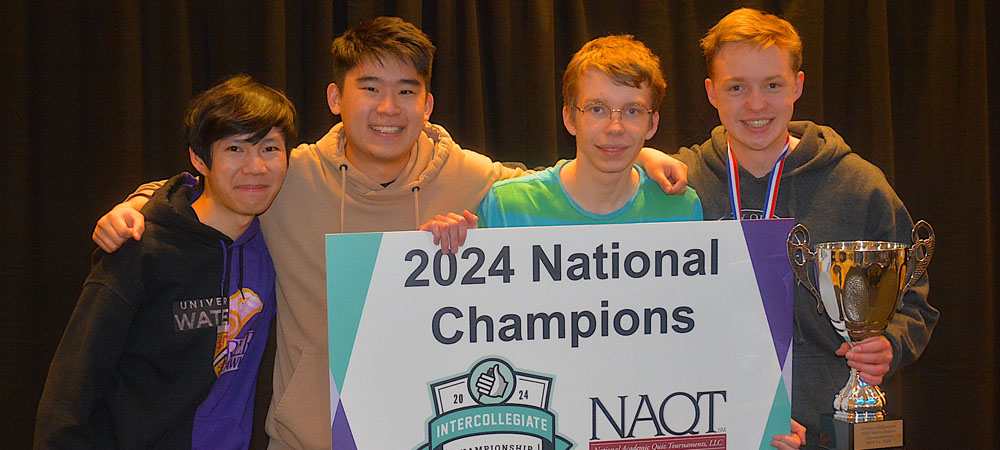
Is the NAQT HSNCT A Prestigious Contest?
Honestly, only a few competitions in the country can rival the NAQT.
It without a doubt is one of the most prestigious competitions any student or school could participate in.
This quiz tournament attracts a lot of attention as top-tier high schools and colleges battle it each year.
Winning a contest like this is a significant achievement as it demonstrates your dedication as a student or has a school that nurtures brilliant minds. It can boost your chances of applying for college or a new job.
Timeline and Structure of the NAQT HSNCT
The journey towards the National Academic Quiz Tournament is exciting. This journey begins with local, state, and regional tournaments held annually.
Teams eager to compete should register for tournaments through their school year — events run from fall through spring, and teams typically attend multiple tournaments to build experience and increase their chances of qualifying.
Small School National Championship Tournament (SSNCT): Schools with fewer than 500 students in grades 10-12 are eligible for the SSNCT, a separate national championship held in late April. Qualification is easier than HSNCT — small schools need to finish in the top 30% of other small schools at a qualifying tournament. If a small school qualifies for the HSNCT, it automatically qualifies for the SSNCT as well. For small schools that want to compete nationally but face long odds against larger programs at the HSNCT, the SSNCT is the more realistic path.
A team qualifies for the HSNCT by finishing in the top 15% of the field at any tournament that uses NAQT questions and is attended by eligible teams from at least three schools. A school may also qualify by winning a tournament outright. Multiple teams from the same school can qualify, but they must do so at the same tournament — a school's B team cannot qualify at a different event from its A team.
At a typical invitational with 20-30 teams, the top 3-4 teams earn HSNCT bids. At larger invitationals with 60+ teams, 9-10 bids may be available. Checking the expected field size of a tournament before registering helps teams gauge how realistic qualification is.
Teams, once invited, have ample time to prepare for the HSNCT, which takes place over Memorial Day weekend (late May). The base registration fee is $880 per team. Teams are responsible for their own travel and accommodation costs — NAQT negotiates discounted room blocks at the host hotel to help manage expenses. For many teams, fundraising in the fall and winter is part of the preparation process alongside the academic side.
The details of next year's tournament are always available well before then, so students can make travel and accommodation plans.
Though slightly different in format, these tournaments follow a similar basic style. Teams buzz in to answer NAQT-approved questions in a head-to-head, round-robin format.
Both teams are presented with tossup questions; if answered correctly, they earn an opportunity to answer bonus questions. This back-and-forth continues for two 9-minute halves.
After that, the team with the most points wins.
To thrive in this demanding environment, teams may study NAQT practice questions to familiarize themselves with the style and format of questions.
The questions are mid-difficulty — harder than a typical classroom quiz but accessible to students who prepare consistently. NAQT publishes a free sample question set and their "You Gotta Know" lists at naqt.com/samples and naqt.com/you-gotta-know, which are the best starting points for any new team.
2026 results: The 2026 HSNCT was held May 22-24 at the Atlanta Marriott Marquis and Hilton Atlanta, with 320 teams competing. The champion was Adlai E. Stevenson High School's A team from Lincolnshire, Illinois.
2027 dates: The 2027 HSNCT is scheduled for May 28-30 (Memorial Day weekend) at the same venue in Atlanta. Registration details will be posted on naqt.com as the season progresses.
Tournaments like these require a lot of practice and study to be successful.
Some things that could help include using practice questions from the QuizBowl archive (another similar competition style) and studying the "You Gotta Know" lists released by NAQT.
Additionally, it's crucial to consistently read and familiarize yourself with all the literary classics that typically appear in rounds.
You also need to stay up-to-date with current events. Stuff like being able to name the "recent Nobel Prize winners, the current cabinet, and presidents of some countries. You'll need to know recent Supreme Court decisions and prominent senators and governors.
It's also a wonderful idea to join social groups devoted to NAQT.
Advantages of Participating in the NAQT HSNCT
A fun and engaging academic challenge
The NAQT quiz bowl is an academic competition that combines the rigors of academic knowledge with the excitement of a game show. You get to show off your intelligence and all the hours you've spent studying throughout the year.
This competitive environment makes learning fun and helps you develop valuable skills.
You'd learn how to recall information quickly and think under pressure. These are all highly desirable for future careers.
It fosters teamwork and collaboration
The NAQT quiz bowl structure encourages teamwork. At the nationals, at least four people must be on stage for each team. This teaches students to rely on their teammates, who might have different strengths or areas of expertise.
Therefore, it becomes a shared experience where you learn with others, finding out how best to get things done so everyone succeeds.
National recognition and prestige
As one of America's top high school competitions, doing well at any NAQT event — including qualifying for the HSNCT — brings deserved recognition not just for yourself but also for your school and even team members.
It shows that you have worked hard academically. If you're looking for a job, this often impresses college admissions officers and employers down the line.
These achievements sometimes make headlines in various news outlets, cementing your place among other national quiz bowl greats. Awesome, right?
Are There Any Cons of Participating in the NAQT?
It's an intense competition
Despite its fun, the NAQT-style quiz is famously intense due to its fast pace and peculiar ruleset. The setting can be challenging because it requires quick decision-making under pressure. You'll also be doing all of this in front of an audience.
This may not resonate well with you if you prefer a more laid-back quiz contest. Moreover, getting ready for the national championship requires substantial amounts of preparation.
You'll have to practice numerous questions, among other things. You'll have to master the buzzer system if you've never participated in a contest like this.
How to Start a Quiz Bowl Team at Your School
Most guides about NAQT tell you to find or join a team. But what if your school doesn't have one? Starting a quiz bowl program from scratch is more doable than it sounds — and being the person who built something from nothing is a better college application story than joining a team that already exists.
Step 1: Find a faculty advisor
You need an adult sponsor to form an official school club. Approach a teacher whose subject overlaps with quiz bowl — history, English, science, or a generalist — and explain that you want to start a quiz bowl team that competes in NAQT-sanctioned tournaments. Bring a one-page summary of what NAQT is and what commitment looks like. Most advisors don't need to know quiz bowl themselves; they just need to be willing to supervise practices and sign tournament paperwork.
Step 2: Register your school with NAQT
NAQT offers a New High School Package — a discounted set of practice materials specifically for schools entering the circuit for the first time. Go to naqt.com/how-to/start-hs-team.html. The package includes a mix of easier and standard-difficulty questions, which is exactly what a new team needs. NAQT's staff are known for being helpful to new programs — emailing hsnct@naqt.com with questions about getting started is genuinely a good idea.
Step 3: Build your roster
Quiz bowl rewards breadth, not depth. You want players who are strong in different subjects, not four students who are all great at history. Recruit from different academic departments — math team, science olympiad, drama club, foreign language honor societies. A team of four with complementary strengths will outperform four students who are all strong in the same area.
Step 4: Start with a local invitational, not nationals
Your first tournament should be a local or regional invitational — not the HSNCT. NAQT's schedule (naqt.com/schedule) lists tournaments by location. Find one within driving distance, register as a varsity team, and treat it as a learning experience. Most new teams go 1-4 or 0-5 at their first tournament. That's fine. The goal is to learn the format, get comfortable with the buzzer system, and identify where your team's knowledge gaps are.
Realistic timeline
Most new programs take 1-2 years to reach qualification level for HSNCT. Building a competitive team across a full school year, then competing in your second year with a clearer sense of your strengths, is a more realistic arc than expecting to qualify in your first season. Stevenson High School — the 2026 HSNCT champion — has been competing for decades. The programs that reach nationals consistently are the ones that treat it as a long-term commitment, not a one-year project.
NAQT vs. PACE NSC vs. NASAT: Which Tournaments Matter for College Applications
There are three national-level quiz bowl competitions for high school students, and they're not the same thing. Understanding the differences helps you set the right goals and describe your achievements accurately.
NAQT HSNCT — the biggest field, most inclusive
The NAQT High School National Championship Tournament is the largest national quiz bowl event, with 320+ teams. It uses NAQT's own question format, which includes literature, history, science, fine arts, geography, current events, math, and popular culture. The inclusive subject mix and large field make it the most accessible national championship for teams at all levels. Qualifying for the HSNCT — even as a first-time team — is a genuine achievement. Winning or placing in the top bracket is a nationally recognized accomplishment.
PACE NSC — smaller, harder, more academic
The PACE National Scholastic Championship is run by a separate organization (PACE, not NAQT) and features about 96 teams. The question distribution is more traditional academic quiz bowl — no popular culture, no geography computation, harder literature and science. It uses "bounceback" bonuses, where an unanswered bonus part goes to the opponent. PACE certifies regional tournaments rather than writing its own packets, and qualification cutoffs depend on the certification level of the tournament (top 15-25% depending on tier). NSC is smaller and harder to qualify for, which means placing well is arguably more impressive — but the HSNCT has a bigger national profile and is the tournament most people mean when they say "quiz bowl nationals."
NASAT — the state all-star tournament
The NASAT (North American Scholastic Aptitude Tournament) is unlike either of the above: instead of competing as a school team, it's a competition between state all-star teams composed of the top players from each state. Teams are assembled through state selection processes that vary widely. NASAT uses the hardest questions available at the high school level — California has historically been the dominant program. It's a prestigious individual recognition, but most students don't encounter it until they've been competing in quiz bowl for several years.
For college applications: what to say
All three are worth mentioning if you've achieved something at the national level, but frame them accurately. "NAQT HSNCT qualifier" (just attending) is modest but real — list it as part of your quiz bowl activity description. "NAQT HSNCT top-10 finish" or "PACE NSC national qualifier" is stronger and deserves its own mention. Avoid conflating the three or implying you competed in one when you competed in another — admissions readers who were quiz bowl players will notice, and they exist.
Power Marks, Negs, and the Scoring System Explained
If you've never played quiz bowl before, the scoring system looks strange at first. Here's how it actually works — and why it matters strategically.
Tossup questions
Tossup questions are read aloud by a moderator. At any point during the reading, a player can buzz in. If they answer correctly before the moderator finishes reading, the team earns points. If they buzz in and answer incorrectly before the question is finished, they receive a five-point penalty (called a "neg") and their opponent can still buzz in to answer.
This creates a real strategic tension: buzzing in early is risky but rewarded. Waiting until the end of the question is safer but earns fewer points — and gives your opponent more time to buzz in first.
Power marks — the early answer bonus
NAQT questions include a "power mark" — a point partway through the question, usually marked with an asterisk (*) when the question is printed. If a player buzzes in and answers correctly before the moderator reaches the power mark, the team earns 15 points instead of the standard 10. If a player buzzes in after the power mark but before the end of the question and answers correctly, they earn 10 points.
In practice, power marks appear at the most obscure part of the question — the early clues are deliberately harder. A player who knows enough about a topic to answer from a very early, difficult clue earns the bonus. This is what separates strong individual players from average ones: the ability to power tossups on your core subject areas.
Bonus questions
When a team correctly answers a tossup, they earn a bonus question — a set of three related parts, each worth 10 points. Bonus questions are not buzzed in; the whole team has time to confer. A maximum bonus earns 30 points. There is no penalty for incorrect bonus answers in standard NAQT format (though in PACE NSC, unanswered bonus parts "bounce back" to the other team).
Match format
Matches consist of two 9-minute halves. Teams play head-to-head, with the same tossup and bonus questions available to both sides. The team with the most points at the end of two halves wins. Ties are broken by a sudden-death tossup.
Why this matters for how you train
The scoring structure means that strategy and specialization both matter. A team that negs constantly will lose close matches even with good subject knowledge. A team that trains individual players to power tossups in specific subjects — and avoids buzzing on questions they don't know — will consistently outperform teams that approach every question the same way. Most experienced coaches assign players to primary subject areas (one player owns history, another owns science, another owns literature) and train them to power their specialty rather than compete across the board.
Who Should Participate in the NAQT HSNCT?
High school tournaments are quiz bowl tournaments primarily targeted at high school-age students, even if you aren’t enrolled at institutions traditionally described as “high schools.” However, be sure to check the full eligibility requirements.
Finally, as a student, it is up to you whether or not you should participate in the quiz tournament.
If you thrive under pressure and don't mind a little competition in front of an audience, you should participate in this quiz bowl.
But if quick questions with buzzers make your heart race with anxiety or stage fright, then maybe a more traditional paper-based scholastic bowl would be better worth considering.
Whether you've been on a quiz bowl team for some time or you've never heard of this until now, playing at least one of the local tournaments can be a lot of fun.
It's an opportunity to test yourself, learn new things, and maybe even discover that you're passionate about this.
Regardless of what works for you, remember that this tournament offers students a fun and educational environment. So, why not give it a shot and see where it takes you?
Quiz bowl competitions like NAQT challenge students across history, literature, science, current events, and more, while building teamwork, quick thinking, and broad academic knowledge.
At Indigo Research, students work one-on-one with expert mentors to explore subjects they’re passionate about through original research. Discover how Indigo Research can help turn academic curiosity into meaningful work that strengthens a student’s college profile.