

Best Summer Volunteer Programs for High School Students

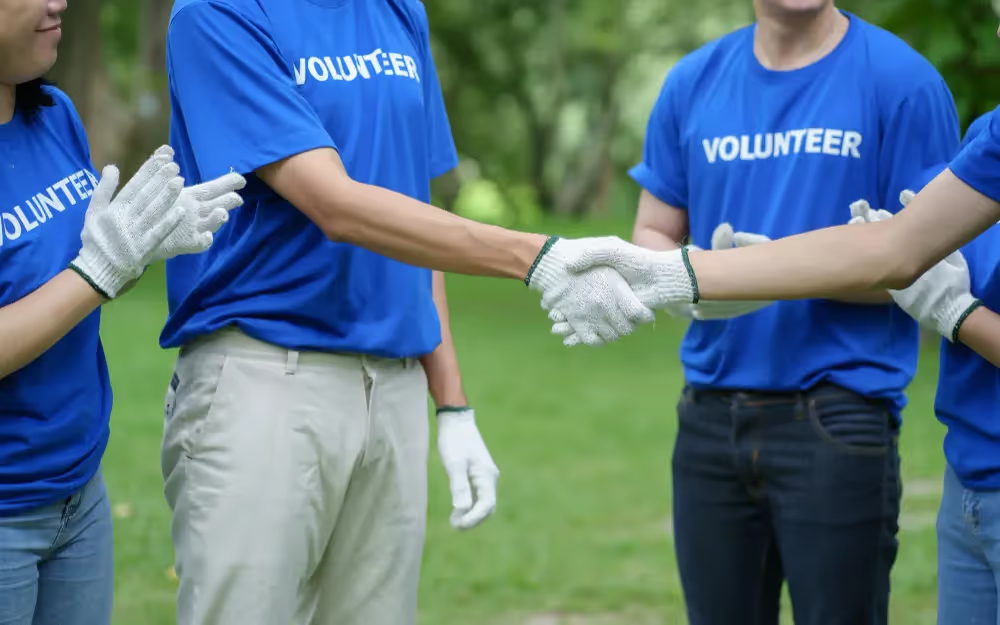
Summers are great for pursuing your passion while engaging in meaningful activities and broadening your horizons. This time, contribute positively to society while giving some back with summer volunteer programs.
Volunteering for an organization helps expand your knowledge, introduce you to like-minded people and explore new possibilities. The best thing about volunteering is that most opportunities have a limited application process. Some do, but most don't.
To give you some great options, this post details 10 summer volunteer programs for high school students, ranging from research and awareness in STEM to public health and animal care.
Top Volunteer Summer Programs For High School Students
Here are 10 programs that you can look into:
NASA and UT Austin's SEES High School Summer Intern Program
The NASA SEES High School Summer Intern Program is a nationally competitive, free STEM program where individual high school students work alongside NASA researchers and University of Texas scientists on real Earth science projects. Students analyze NASA satellite data to study topics including remote sensing, climate science, natural hazards, and mission design. All interns present their work at the Virtual SEES Science Symposium at the end of the program.
The program has two phases. The first is a virtual learning period (May 15 – July 1) where selected interns complete required distance-learning modules. The second is a two-week on-site internship at the UT Center for Space Research in Austin, Texas, which includes evening sessions and field investigations alongside graduate students.
One important note: the official program page states that continuation of the program depends on future NASA funding availability. Check csr.utexas.edu/sees for the 2027 announcement before planning around it.
Fee/stipend: Free — no cost to participate.
Application deadline: February 22, 2026 (for 2026 cycle); 2027 applications will open in late fall 2026.
Program dates: Virtual learning May 15 – July 1; on-site internship July 5-18, Austin, TX.
Eligibility: Current sophomores and juniors ONLY (rising juniors and seniors). Must be 16 years old by July 5, 2026. Must be a US citizen. Students who have previously participated in SEES are not eligible.
Summer Community Crews
The Summer Community Crews program focuses on cleaning and tending natural areas in your community spaces, such as waterfronts, urban landscapes and parks that require maintenance.
You learn collaboration and leadership skills while working with 6-12 high school students. Also, you get to complete trail maintenance and site restoration projects in national, regional, state or local parks.
Moreover, the crew leader takes you on field trips where you can learn about your local environment. These field trips are great opportunities to learn about camping, canoeing and biking.
Fee/stipend: Earn a stipend or wage for your work or receive credit for community service hours
Application Process: Ongoing
Program Dates: Summer Crews run five days a week from June through August.
Eligibility: High school students ages 15-19 are eligible
VolunteerMatch
VolunteerMatch is one of the most effective ways to recruit highly qualified volunteers. They match you with like-minded people who share your passion and are willing to commit to your cause.
Usually, these volunteers are also donors who can contribute time and money. Since there are more volunteers and volunteer opportunities, VolunteerMatch is an excellent platform to connect good people with good causes and help bring about positive change.
Their automated system simplifies workflow and streamlines repeated tasks such as posting and reposting volunteer opportunities. It's fast-paced, effective and super easy to use. It’s a good opportunity for high school students to give back to the community.
Fee/stipend: None
Eligibility: Anyone can join
Meals on Wheels
Meals on Wheels offers volunteer opportunities for high schoolers to engage with seniors and older people who require extensive help from volunteers to keep their services running.
Students get the opportunity to go the extra mile and deliver more than nourishment; they deliver companionship to seniors deprived of it. High school students volunteer to assist in the kitchens and make meal deliveries.
They strive to develop a human connection by eating meals with them, listening and sharing stories, and generally brightening the lives of older adults. Moreover, the volunteers develop empathy and understand the value of social responsibility.
Fee/stipend: None
Application Process: Register yourself here.
Youth Conservation Corps
The United States Youth Conservation Corps (YCC) offers high school volunteer opportunities to engage young people in meaningful work for 8 to 10 weeks. If you love physical activity in nature, this program is for you.
The program includes experiences at national parks, fish hatcheries, wild refugees and forests where students develop ethics for environmental stewardship and civic responsibility. YCC offers paid daytime work activities with volunteers who commute to the Federal unit daily.
Offering summer camp volunteer opportunities for high school students, the projects include clearing invasive species, seed collection and propagation, youth hikes and trail maintenance.
Fee/stipend: Pay varies by location and agency. Most YCC positions in 2025-2026 paid between $15 and $19 per hour — well above federal minimum wage. Check each specific posting for the current rate.
Application Process: YCC positions are posted independently on USAJOBS (usajobs.gov) — search "Youth Conservation Corps" to find open positions near you. You can also contact your nearest national park, national forest, or Bureau of Land Management office directly, as some positions are filled locally without a USAJOBS posting. Most summer positions open in February or March and fill quickly.
Program Dates: Varies by park and position — most summer positions run 8-10 weeks between June and August.
Eligibility: Youth 15-18 years of age and are permanent US residents
American Red Cross
The American Red Cross offers summer medical volunteer opportunities for high school students. The volunteers learn how to work effectively with people belonging to different backgrounds.
Also, they learn to mobilize communities and bring positive change in society. The high school students learn to polish their leadership skills, socialize with like-minded people and explore new interests in a friendly and encouraging environment.
The American Red Cross involves volunteers in healthcare-related activities such as disease management, disaster response and blood donation. The volunteers get first-hand experience in saving lives and look into several healthcare-related issues in the country.
Fee/stipend: None — all volunteer roles are unpaid. Register and complete orientation at redcross.org/volunteer.
Eligibility: Most independent Red Cross volunteer roles require age 16 or older. Students aged 14-15 can volunteer in certain roles when accompanied by a parent or guardian who is also a registered Red Cross volunteer. Some chapters have youth-specific programs with their own age policies — filter by zip code at redcross.org/volunteer to see what's available near you.
Special Olympics
The Special Olympics is about transforming lives, including your life. This global movement program focuses on the inclusion of people suffering from intellectual disabilities via programming in education, sports, health and community building.
Depending on their strengths, the volunteers can opt for multiple roles as event organizers, managers, trainers, coaches, officials, and fundraisers. If you are 16 and above, you are eligible to coach or be an assistant coach and can work directly with athletes.
Special Olympics competitions are held yearly at different levels, including local, regional, national and international.
Fee/stipend: None
Application Process: Start at specialolympics.org/volunteer or go directly to your state chapter's website — most list upcoming events and open volunteer roles. Many chapters also post opportunities on Idealist.org and VolunteerMatch.
Eligibility: Age requirements vary by chapter and role. Most event-day positions (scorekeeping, guiding, setup) are open to ages 14 and up; some chapters allow students as young as 13 when accompanied by a parent or guardian. Coaching roles require age 16 or older. Check your specific chapter listing for exact requirements.
Keystone Boys & Girls Clubs of America
Keystone Club is one of the summer volunteer programs for 14-year-olds with a prominent presence in the United States. This extensive network of local clubs offers numerous volunteer opportunities.
The program mentors young children, provides volunteering services at the local library and manages events at the youth center. At the Keystone Club, you can join an existing club or start your own with at least six members.
As a team, you assess the group's passion for planning and implementing a project that benefits your community. Your project can be about education, recreation or any other service activity. You get to work with an adult advisor.
Fee/stipend: The Keystone Club program is free to participate in through your local Boys & Girls Club. Find your nearest club at bgca.org/get-involved/volunteer.
Note: Keystone Club is a year-round leadership program with a summer component, not a dedicated summer-only program. Summer activities are planned by each club and vary by location.
Application Process: Enter your zip code and locate opportunities near you!
Eligibility: Boys and girls ages 14-18
How Many Volunteer Hours Do You Actually Need?
Most articles tell you that volunteering looks good on college applications. Few tell you what that actually means in practice.
There is no universal minimum. The Common App and Coalition App do not ask for total volunteer hours, and top schools do not publish a threshold. What admissions readers look for is not a number — it's a pattern.
The pattern that stands out looks like this: consistent involvement with one or two organizations over at least a year, a growing level of responsibility (from participant to team leader, from follower to organizer), and the ability to speak specifically about what you did and why it mattered. A student with 40 hours of sustained, meaningful involvement in one cause is more compelling than a student with 200 hours spread across ten unrelated events.
Some rough benchmarks are useful for planning. For schools that ask about activities in detail (like MIT's additional information section or alumni interviews), admissions readers say that 50-100+ hours in a meaningful role is where a single activity starts to stand out on its own. Below that, it's typically treated as part of a broader picture of involvement, not a standalone credential.
The most common mistake students make with volunteering is treating it as a box to check rather than a story to tell. Choose something you can return to. Take on more responsibility over time. Know what changed because of your presence — whether that's a specific program you helped run, a number of meals delivered, or a project you initiated. That's what gives an admissions essay or interview answer real substance.
What "Quality Over Quantity" Actually Means
Admissions readers at selective schools have said publicly — in recorded panels, published interviews, and official guidance documents — that they would rather see a student deeply committed to one cause than superficially involved in ten. The Common App gives students 10 activity slots total across everything: sports, clubs, jobs, volunteering, and arts. Most successful applicants at highly selective schools fill 7-9 of those slots. A student who fills all 10 with brief, unrelated volunteer stints can look less focused than one who lists 6 or 7 things with clear progression.
For volunteer work specifically, "quality" means three things:
- You can describe a specific impact — not just "I volunteered at a food bank" but "I helped coordinate the Saturday morning shift for a team of 12 student volunteers and we packed roughly 800 meals per session."
- You held a consistent role long enough to develop real skill or responsibility. One-time events count for something, but ongoing involvement is what makes the story.
- The work connects to something you actually care about — your academic interests, your community, or a personal experience. Admissions readers can usually tell the difference between volunteering chosen for résumé value and volunteering chosen because it mattered.
None of this means you should only do one thing. It means that whatever you do, do it long enough and deeply enough that you can talk about it with specificity. That specificity is what turns a list item into a story.
How to Ask for a Recommendation Letter from a Volunteer Supervisor
A strong letter from a volunteer supervisor can carry real weight — especially if the organization is well-known, if you held a significant role, or if the letter speaks to qualities your academic teachers can't address (leadership under pressure, community judgment, maturity outside the classroom).
Ask early, and ask in person. Most college applications are due in November (early decision) or January (regular decision). Your supervisor needs at least 4-6 weeks to write something thoughtful. Ask by September at the latest for fall applications. A text or email as a first ask is rarely the right move — if you have any in-person contact with this person, do it face to face or over a call.
Make it easy to say yes. When you ask, explain which schools you're applying to, what kind of letter you need, and what the deadline is. Offer to send a short summary of your time volunteering together — dates, what you worked on, any specific moments or projects you remember. A supervisor who worked with dozens of students will appreciate the reminder.
Be specific about what you'd want them to address. You might say: "I'd love it if you could speak to how I handled the coordination role I took on during our spring event, and how I worked with the younger volunteers." You're not writing their letter — you're giving them a frame so they can write a better one.
Follow up once, politely, about two weeks before the deadline. If they say they're too busy, thank them and move on — a reluctant letter is worse than no letter. After the letter is submitted, send a handwritten thank-you note.
Wrapping Up
This post outlines the Top 10 summer volunteer programs for high schoolers that allow the students to give back to the community. Most of these programs have a two-fold impact: educating passionate students in advanced academics and using their skills to assist in research. The listed programs strive to groom the next generation to volunteer and explore opportunities by participating in different projects.
You can do something meaningful by doing research such as deepening your intellectual curiosity and building expertise that would make your college application stand out.
Summer volunteering can be a great way to explore your interests, build new skills, and make a meaningful impact. For students looking to go deeper academically, research can offer another way to turn their interests into a lasting achievement.
At Indigo Research, students work one-on-one with expert mentors from leading universities to conduct original, publication-ready research. Discover how Indigo Research can help you turn your interests into meaningful academic work.