
What Are the Best Research Mentorship Programs That Allow Me to Publish as a High Schooler?

.jpg)
Finding a strong research mentorship program is key to successfully publishing as a high schooler. The best research mentorship programs include structured initiatives like Indigo Research, which offer both 1:1 mentorship and small-group research cohorts guided by mentors from top universities. Since 2019, Indigo has supported more than 1,100 students, worked with over 330 PhD mentors, and helped students publish in more than 30 academic journals.
These programs help students design original research projects, complete college-level work, and receive support with academic writing, journal selection, and publication submission. The strongest programs showcase proven outcomes, offer hands-on guidance from experienced researchers, and provide clear pathways to publishing in student or academic journals.
Top Online Research Mentorship Programs with Publication Pathways
While several research mentorship programs offer strong academic experiences, some provide more structured support and proven outcomes for students aiming to produce publication-ready research.
Below is a closer look at the top options, starting with Indigo Research, which offers one of the most comprehensive research mentorship models for high school students.
1. Indigo Research
Indigo Research offers a top-tier, structured, multi-month online research mentorship program for high school students who want to complete and publish original, undergraduate-level research. The program combines small research cohorts with one-on-one mentorship from over 330 PhD-level mentors from leading universities worldwide across STEM, humanities, social sciences, and interdisciplinary fields. Projects are typically hypothesis-driven and unfold over several months, with clear milestones, iterative draft revisions, and focused feedback designed to produce a polished manuscript ready for journal submission.
Since launching in 2019, more than 1,100 students have completed research projects through the program. Indigo Research operates alongside Crimson Education, whose students report a 98% acceptance rate to at least one of their top five universities. A distinctive feature is the opportunity to earn 2–4 transferable college credits through UCSB Extension for qualifying pathways, allowing students to receive an official transcript recognizing their research work. Indigo students have also published in more than 30 academic journals, reflecting the program’s emphasis on producing submission-ready research. For students targeting selective universities, the combination of structured mentorship, publication guidance, and admissions awareness can be a meaningful differentiator.
2. Pioneer Academics
Pioneer Academics uses a small-cohort seminar model rather than traditional 1:1 mentorship. Students participate in research seminars of roughly 6 students and complete original research over 12–25 weeks.
The experience resembles a graduate-style research course: guided discussion, academic readings, and independent paper development. Pioneer reports that students may earn college credit through partner institutions (2–4 credits typical), and final papers are evaluated for potential publication. The cohort structure can be appealing to students who enjoy discussion-based academic environments rather than purely individualized mentorship.
3. Lumiere Research Program
The Lumiere Research Program follows a defined 12-week format centered on weekly one-on-one mentorship sessions. Students work directly with PhD mentors to develop and complete an independent research paper from start to finish.
The structure is milestone-driven: topic refinement, literature review, research design, drafting, and revision are built into a fixed timeline. For students who prefer clear deadlines and a predictable cadence, the format can feel manageable and contained. Lumiere emphasizes the completion of a polished research paper suitable for submission to youth academic journals.
4. Cambridge Future Scholar Programme (CCIR)
The Future Scholar Programme from the Cambridge Centre for International Research runs about 13 weeks and pairs students with faculty from Cambridge, Oxford, Harvard, and Stanford. Students work in small groups of 2–5, getting guidance from mentors and feedback from peers while developing an independent research project.
The program includes publication support, like help with journal selection, manuscript formatting, and submission strategy. The small-group setup feels more like a mini university seminar, giving structured guidance plus a bit of peer collaboration.
5. Nova Research (Nova Scholar)
Nova Scholar offers a cohort-based research mentorship program for middle and high school students, matching them with mentors who are PhDs, MDs, and JDs from leading universities. Rather than being purely one-on-one, students typically work in small groups, which allows for peer discussion while still receiving individualized feedback. The Nova Research program includes structured research development from early-stage idea formation through project design and execution.
Built-in publication support is a core part of the model, including guidance on journal selection, manuscript formatting, and submission strategy. Nova reports that students have gone on to publish in over 20 youth-focused research journals and academic competitions. The mentor network spans a wide range of disciplines, allowing students to pursue projects across STEM, humanities, law, medicine, and interdisciplinary fields while working with experts connected to top institutions.
6. Polygence
Polygence uses a session-based model that typically includes 10 one-on-one meetings with a mentor. Students define a research question or creative project, conduct analysis, and produce a final paper or applied deliverable.
The structure is relatively flexible, which appeals to students balancing AP coursework, athletics, or other extracurricular commitments. Publication is not built in as a guaranteed outcome, but can be pursued depending on the project and mentor guidance. Some students use the experience to build a research portfolio or prepare for competitions rather than focusing exclusively on journal submission.
7. RISE Research
RISE Global Education offers a selective, one-on-one online research mentorship program where students work directly with PhD mentors over several months (most projects run about 12–16 weeks, depending on pacing). Students move step by step from topic selection and feasibility analysis to hypothesis development, literature review, methodology design, and data collection. The structure is designed to mirror a real research workflow, with regular mentor meetings and defined milestones to keep projects on track.
In the second half of the program, students focus on data analysis, manuscript drafting, and multiple rounds of revision to produce a submission-ready paper. Mentors provide iterative feedback throughout the writing process and support journal selection and submission where appropriate. While publication is never guaranteed, the goal is to guide students all the way from initial concept to a polished academic manuscript that meets external review standards.
8. Veritas AI Fellowship
Veritas AI runs a 12–15 week AI Fellowship for high school students to develop independent AI projects. You work closely with mentors on research questions, coding, and model building, getting hands-on experience from start to finish.
The program also guides you through drafting a manuscript and thinking about where to submit your work. Publication isn’t guaranteed, but you get strong support to turn your project into something submission-ready.
9. Ignite Achievers
Ignite Achievers is a virtual research mentorship program where high school students can dive into original research with guidance from university faculty mentors. You get a mix of one-on-one mentoring and small-group collaboration, working on projects that are hypothesis-driven and take a few months to complete.
Students get practical experience, learn how to submit to journals, and gain confidence in their work. Since it’s fully online, you can participate from anywhere, making it a flexible option if you want hands-on mentorship without leaving home.
10. Research Ignited
Research Ignited offers a High School Research Program where students work one-on-one with PhD mentors to complete original research projects online. The program runs 2–5 months and guides students through data analysis, scientific writing, and creating a finished paper suitable for journals or competitions.
Students have tackled projects in areas like neurodevelopment and AI, showing the program’s flexibility. Its focus on mentorship and research outcomes makes it a strong option for high schoolers aiming to build a competitive college application.
Why High School Research Publication Matters
Research publication has long been reserved for academia and scientific professionals. Having your name on a legitimate piece of peer-accepted published research before even entering college is beyond impressive and shouldn’t be taken lightly.
Accomplishing such a task shows self-discipline, motivation, grit, and intelligence. Finding the time and navigating the complicated systems involved, while still in high school, is challenging and will shine brightly on any college application or CV.
Selecting a research topic that aligns with the type of studies and work you hope to take on in the future will also be a huge step in the right direction. While others may not have even considered their first publication yet, you will already have one under your belt. This is even more reason to take on a research publication mentorship program to help ensure that your work is a quality piece that you will be proud to showcase throughout your career.
For even more guidance, check out this helpful Guide to Writing Research Papers for High School Students.
What Makes a High-Quality Research Mentorship Program?
A quality research mentorship program can make a world of difference when tackling publication in high school. The best programs give you consistent one-on-one and group cohort support, clear milestones, honest feedback, and enough time to revise your work properly. With the right mentor, you’ll learn how to think like a researcher, not just rush to finish a paper. Having a pro on your side who has insider information and a deep understanding of the process will set you up for a rewarding experience with a successful outcome!
Strong programs share these 6 traits:
- PhD or postdoctoral-level mentors
- Clear hypothesis-driven research design
- Iterative written feedback
- Transparent publication pathways
- Defined timelines
- Accountability checkpoints
Students conducting mentor research at an undergraduate level develop:
- Literature review skills
- Data analysis competence
- Academic writing clarity
- Revision resilience
There is also a meaningful distinction between:
- An internal program showcase
- A conference presentation
- A peer-reviewed journal publication
Publication is never guaranteed. Revision cycles are common. This is why strong science mentors and structured guidance matter. That process builds not only a research portfolio but also intellectual confidence.
For more ideas and inspirations, take a look through these 10 Research Opportunities for High School Students.
University-Based and Free Research Opportunities
There are highly selective, university-based summer research programs out there. But spots are limited, and a lot of them are location-specific. Free programs can absolutely be worthwhile, just keep in mind that they don’t always include step-by-step support all the way through to publication.
Paid mentorship programs, on the other hand, usually come with clearer structure, regular check-ins, and built-in deadlines. At the end of the day, you want to look closely at accessibility, selectivity, and how deep the academic experience actually goes, not just the name of the program.
How One-on-One Science Mentorship Accelerates Publication
When you have one-on-one science mentoring, you get the space to modify your research inquiry, adjust your methods, and revise your writing as many times as it takes before you submit. That back-and-forth is what actually makes the project stronger.
Many independent research projects take months to finish. And if you’re submitting to an external journal, the review process can take even longer. Individual structured guidance helps keep the momentum going and the goal in focus.
One-on-one mentorship provides:
- Refined research questions
- Statistical guidance
- Editorial revision
- Submission strategy
Get a fresh perspective on research for the next generation from this interesting and motivating article on Breaking Research Barriers with Dr. Kimberly Clark.
Choosing the Right Science Research Mentoring Program
Choosing the right science research mentoring program comes down to a few key factors. Look at mentor expertise. PhDs or experienced researchers make a big difference in guidance quality. Check the program’s structure and duration, from a few weeks to several months, and see if it offers publication support, milestone tracking, and feedback cycles.
Think about your goals too: are you exploring a topic, or aiming to complete a full research project for submission? Weigh cost, accessibility, and alumni outcomes to make sure the program fits your schedule, budget, and academic ambitions. Look for evidence. Quality research program mentorship programs should be able to showcase how many publications their students have published and to which journals.
When evaluating a science research mentoring program, ask:
- Who are the mentors?
- Is publication actively supported?
- What is the realistic duration?
- Is college credit available?
- Are outcomes documented?
Transparency around cost, timeline, and expectations is essential. Understanding the submission process in advance can prevent unnecessary frustration.
If you are new to the publication process, I recommend reviewing this guide on How to Publish a Research Paper in 5 Easy Steps.
Research Types
Not every research program works the same way, and the kind of research you do can matter just as much as the program’s name on your résumé. In the best programs, you’ll be doing real, original research that mirrors what college students and early researchers actually do. That usually means coming up with a hypothesis, designing experiments or studies, analyzing data, and working closely with a research mentor who guides you every step of the way.
Choose the research topic and type based on your desired degree and career path, personal passion and interests, and the universities you plan to apply to.
Depending on the field, students may complete:
- STEM research in areas such as biology, computer science, engineering, artificial intelligence, or medicine
- Humanities research, including history, philosophy, literature, or political theory
- Social sciences research in psychology, economics, public policy, or sociology
- Interdisciplinary research that blends technical and human-centered approaches
The most rigorous programs emphasize peer-reviewed research standards and expect work at a college-level research depth. That means students aren’t just summarizing articles; they’re contributing original analysis, data, and interpretation.
Publication & Academic Processes
After selecting your research mentorship program, deciding on your topic of focus, conducting the research, and compiling your data, comes the final step- submitting your work for publishing! There are several reputable online journals that you can consider during this process, and your research mentor can help guide you in selecting the best one for you. Below are a few of the top-ranking platforms for high school student research publications.
Top Publishing Journals:
Some publishing journals have additional fees after a piece of research has been accepted for publication, including membership options and additional printing opportunities. So, be sure to check out all of the details with your research mentor before submitting.
After your research paper has been accepted, it’s not unusual to receive feedback with edits to complete. This revision process can take time, several months at times, so add this extra time into your timeline. Having a good research mentor makes all the difference in navigating this often complex process.
Research Program Features to Evaluate
Not all research mentoring programs offer the same level of rigor and successful publishing outcomes. When evaluating a research mentorship program, always check the following features to find the experience that’s right for you.
Mentorship Models
- One-on-one mentorship
- Faculty mentorship or PhD-level mentors
- Postdoctoral mentors or experienced researchers
- Clear designation of a research mentor or Principal Investigator (PI)
- Small cohorts (often 4–6 students) if cohort-based
Learning Environments
- Virtual/online programs
- On-campus programs
- Research internships
- Laboratory experience
- Field work opportunities
Program Structures
- 3–6 months typical project length
- 12-week standard terms
- 10-week session models
- Clearly defined milestones
- Iterative feedback cycles
A strong research mentorship program may also offer:
- College credit (2–4 transferable credits is typical)
- Official transcripts through accredited partners
- A formal research portfolio
- Letter of recommendation or evaluation letter
- Research presentation or oral defense
- Poster presentation
- Research symposium or conference presentation
- College applications enhancement
- STEM identity development for aspiring scientists
Students pursuing deeper mentor research projects benefit significantly from structured accountability rather than informal advising.
Program Outcomes That Actually Matter
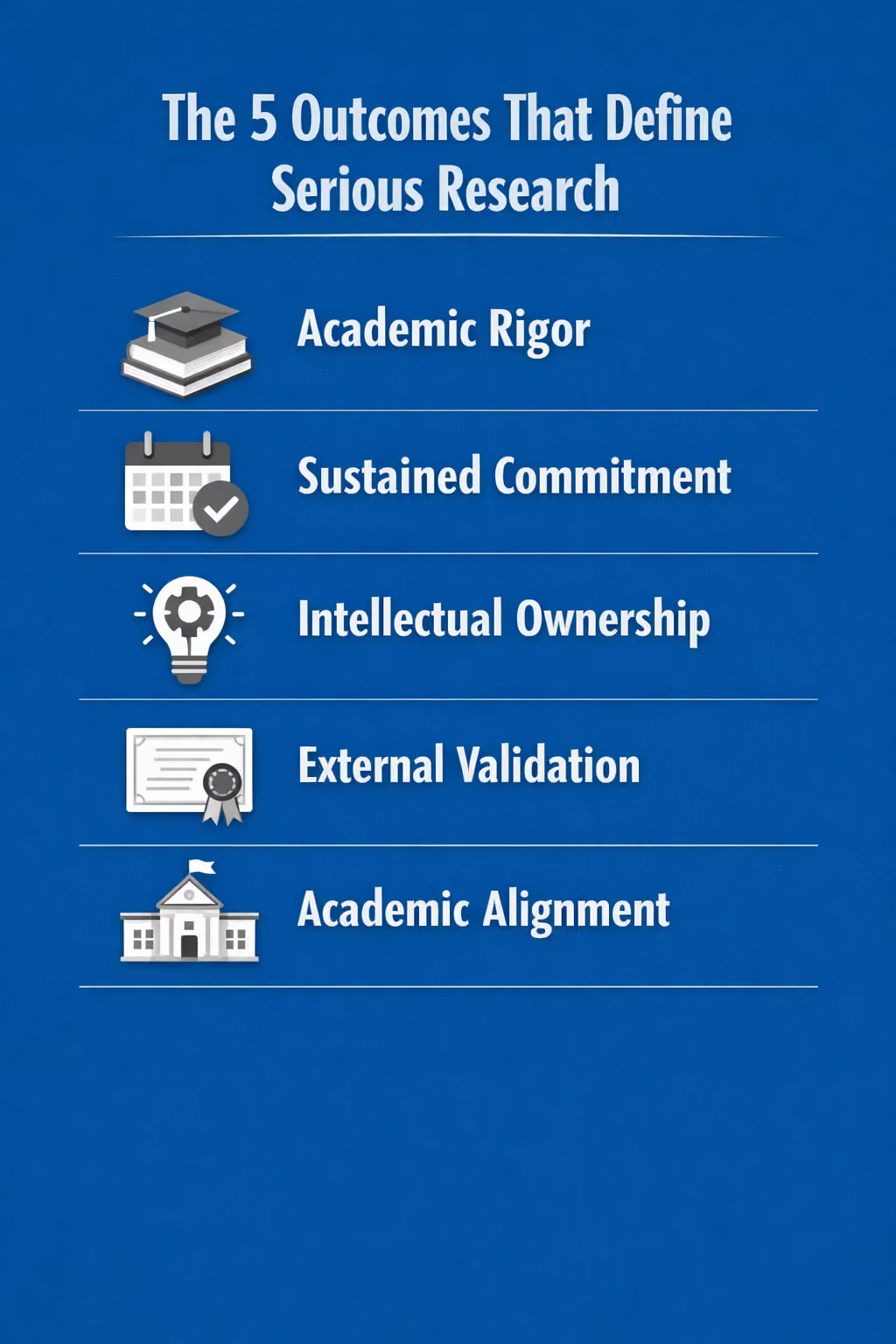
When asking what makes a science mentorship worth the investment, focus on outcomes. A program’s structure and mentor credentials matter, but what ultimately counts is what the student produces and can clearly show for their time. Strong outcomes demonstrate depth, persistence, and real academic growth. The final outcome should be a quality research paper that is accepted and published within a reputable academic publishing journal.
For students aiming for acceptance at top research universities such as Yale University, Columbia University, Johns Hopkins University, Stanford University, or Massachusetts Institute of Technology, demonstrating the ability to conduct and publish undergraduate-level research can significantly strengthen an application!
Eligibility & Student Profiles
Most structured research mentorship programs are open to:
- Grades 9–12
- High school juniors and seniors
- International students (for virtual programs)
Competitive programs often expect:
- Demonstrated academic excellence
- Strong GPA (some publish minimum thresholds such as 3.3 unweighted)
- Intellectual initiative
- Clear subject interest
Typical participants include:
- STEM-focused students
- Humanities researchers
- Interdisciplinary scholars
- Underrepresented students in STEM
- Students from underserved communities
- High-potential, intellectually motivated learners
The strongest candidates are not always the top performers on paper, but the students willing to show commitment by engaging deeply in dedicated research over time.
Research & Competitive College Admissions
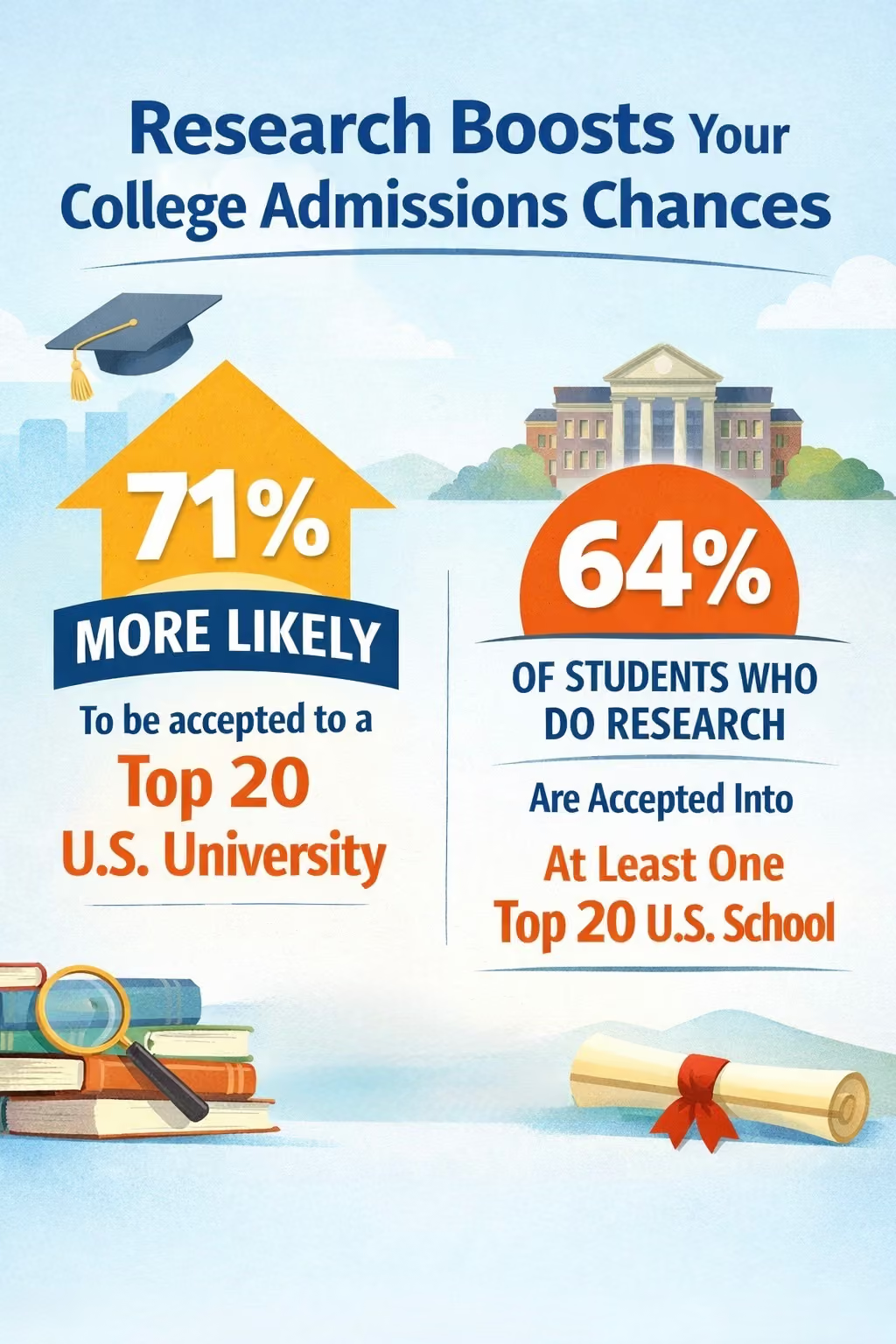
Selective universities increasingly look for sustained academic engagement rather than just short-term activities. According to Common Data Set reporting from institutions like Harvard University and Stanford University, academic rigor and extracurricular distinction remain highly influential factors.
Publishing original research demonstrates:
- Intellectual vitality
- Independent initiative
- Academic resilience
- Long-term project commitment
FAQ
Can international students participate?
Yes, most virtual research mentorship program options are open internationally, though eligibility varies.
Do I need prior research experience?
Not necessarily. Many programs accept grades 9–12 students with strong academic records.
How do paid mentorship programs compare to free options?
Free programs are often highly selective and limited in scope. Paid programs may provide broader access and structured support, though quality varies.
What GPA is required?
While requirements differ, competitive programs generally expect strong academic performance and demonstrated curiosity in the chosen field. 3.3 or higher is a common range.
Next Steps
Publishing original research as a high school student is ambitious, but entirely possible with the right structure and guidance. The students who succeed are the ones who commit to the process and work closely with experienced mentors.
If your goal is to produce meaningful, publication-ready research before college, exploring research mentorship programs with proven success will be the most strategic first step. The sooner you begin, the closer you get to becoming a published researcher!
Ready to turn your research ideas into real results? Indigo Research’s 1:1 and small-group mentorship programs connect high school students with faculty from top universities. Get hands-on guidance, produce publishable work, and build a research portfolio that truly stands out. Start your journey with Indigo Research today.