


What Is Early Decision 2 and How Does It Differ from Early Decision 1?
Each year, at the onset of college application season, well-informed students ask the question: “Should I apply for Early Decision, and what does that mean for me?”
Many families spend months agonizing over their student’s Early Decision 1 choice, and understandably so. ED1 is a binding application plan. You can only choose one school to apply early to in November, and if accepted, you must attend. Students hear back by December, getting clarity before the regular decision round. Applying ED can meaningfully increase your chances at top schools, trading commitment for a greater shot at admission.
ED2, like ED1, is a binding early-admission program, but with slightly later January deadlines. Students who were not accepted or weren’t ready for ED1 get a second chance to apply early. Early Decision 2 is often overlooked, but it offers students another opportunity to boost their odds at a school they love, especially if ED1 didn’t pan out.
Strategically using ED2 can be key to increasing your admission chances, and not utilizing this round is often the biggest missed opportunity families make during the application experience!
Why ED2 Exists
The Early Decision 2 round serves an important purpose for both colleges and students. During the first round in November, many applicants target the most selective schools, such as Ivy League institutions, resulting in a flood of applications and a high number of deferrals or rejections. ED2 provides a second opportunity for students who were not ready or successful in the first round to apply early to their top-choice schools.
For students, this opportunity can improve admission odds compared with Regular Decision and offers extra time to strengthen their applications with improved grades, test scores, or extracurricular achievements. For colleges, ED2 allows them to admit a new group of highly committed applicants, helping to manage enrollment, reduce uncertainty, and attract talented students who may have missed the first round.
Advantages for the ED II Applicant
Benefits for Students
- Offers a second chance at a binding early application after ED1
- Often provides better odds than Regular Decision because the pool is smaller
- Allows students to strengthen their application with fall grades, test scores, or new achievements
- Delivers an earlier answer: usually in February
Benefits for Schools
- Helps colleges manage yield and shape their incoming class
- Attracts strong applicants who didn’t apply ED1
- Reduces uncertainty in enrollment numbers
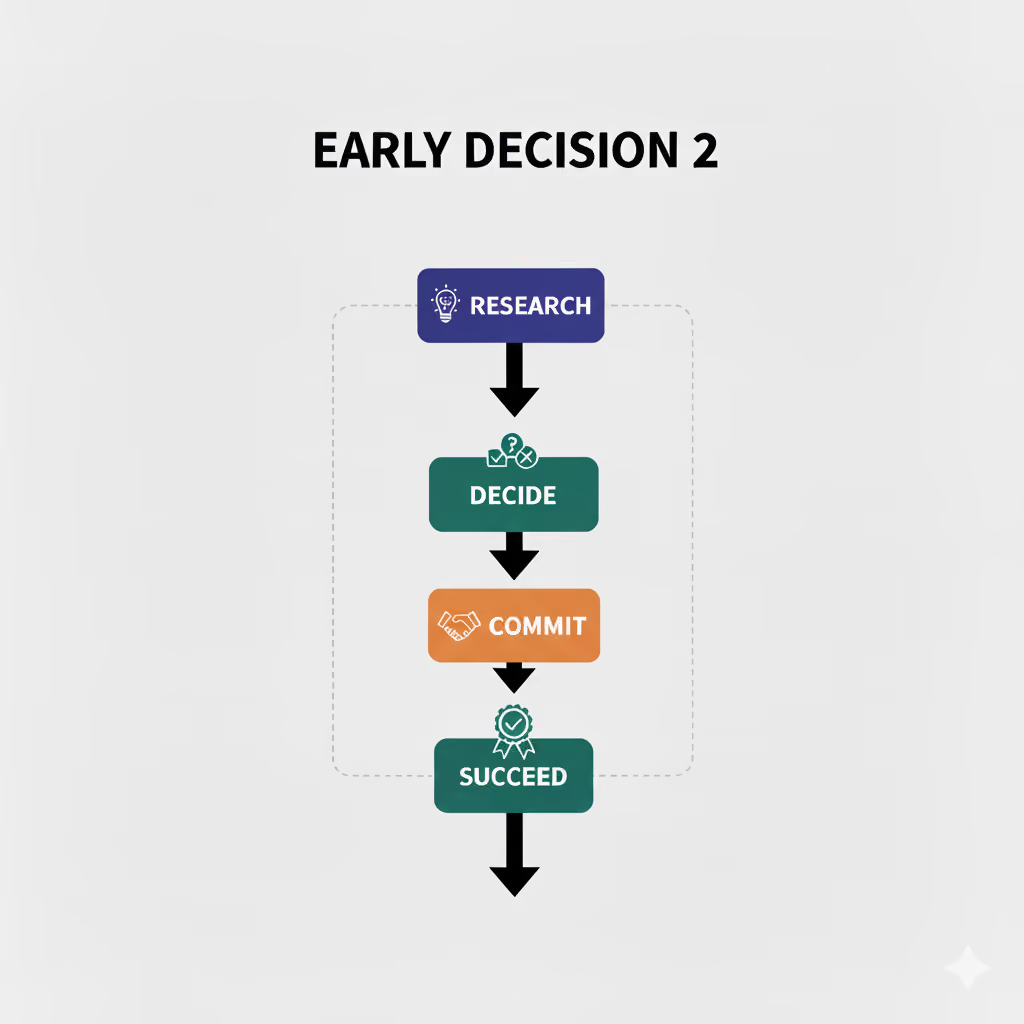
What Schools have ED2 and how does it help my chances?
You’ll notice that there isn’t one specific type of school that utilizes Early Decision. A wide variety of schools have ED2. From small liberal arts colleges to large research universities, several schools use Early Decision 2 to attract strong students who are interested in applying in this early second round.
Check out this podcast on college application options: Early Decision, Regular Decision, and the Rest: What it all Means
Popular and Well-Ranked ED 2 Schools
These are huge, well-known schools that offer tons of majors and activities. You get amazing resources, big alumni networks, and opportunities in pretty much every field. It’s the perfect place if you want a diverse, large-scale college experience.
Best Liberal Arts Colleges Offering Early Decision 2
These smaller colleges focus on undergraduate teaching. You'll get small classes, one-on-one time with professors, and a tight-knit community. It’s an ideal choice for students who learn best in a personal setting and have a liberal arts interest.
Top STEM-Focused Universities with Early Decision 2 Options
If you’re serious about science, tech, or engineering, these schools have some of the best labs and programs. They connect you directly with top companies and experts in the field, and offer coursework focused on real-world projects. This is where many of the top technical talent is trained.
Elite Northeast Schools with ED2 Programs
These schools have a deep history and are famous for being academically tough. Their locations put you close to major business and cultural centers for great internships and post-graduation jobs. They offer a highly respected degree that can open doors in the future.
Leading West Coast and California Colleges Offering Early Decision 2
You get top academics mixed with the West Coast's innovative, sunny vibe. Being near tech, film, and other big industries means easy access to exciting careers. Plus, you get to enjoy great weather and a dynamic culture.
Choice Southern Universities with Competitive ED2 Programs
These southern colleges are quickly becoming some of the most sought-after schools in the country. They balance a strong educational experience with rich campus traditions and a welcoming community atmosphere. They're a great choice for quality and overall college life.
ED Acceptance Rates vs. Regular Decision: School-by-School Breakdown
This table provides a snapshot of approximate acceptance rates for Early Decision (ED1 & ED2 combined) versus Regular Decision, showing how likely applicants are to be accepted during ED versus RD. The ED : RD ratio illustrates general trends across schools, offering a useful reference point as you compare your options and plan your applications.
At Indigo, we consider schools with an ED to RD ratio of 2.0 or higher to be strong choices!
Not all schools publish detailed acceptance rate information every year. The numbers in the above table are based on a combination of publicly available information, school-reported data, and reputable estimates. These rates can be used as a general guide rather than exact figures. For the most current and precise information, it’s always important to check directly with each school’s admissions office.
Take a look at these popular school ranking Organizations: U.S. News & World Report, Forbes, Niche, Times Higher Education, QS World University Rankings
ED2 Application Deadlines and Decision Dates for 2025-2026 Cycle
Application Deadlines
- Early Decision 2 applications are typically due in early January, usually between January 1 and January 15.
- Some schools may allow slightly later submissions, but January is generally the standard window.
- Students are encouraged to finalize essays, recommendations, and transcripts ahead of time to avoid last-minute delays.
Decision Notifications
- Colleges generally release ED2 decisions in mid- to late-February, yet some notifications may occur as late as March.
- Notification methods are usually electronic, though some schools may also mail letters.
- Dates can vary by institution, so applicants should monitor official communications carefully.
Enrollment Deposit Deadlines
- The national candidate deposit deadline is most commonly May 1, but the agreement to attend is binding as soon as the school grants acceptance to the ED2 applicant.
- Some schools may have slightly different deposit deadlines and procedures, so it is recommended to confirm with each college’s admissions office.
Since not all schools have ED2, students should always confirm whether their preferred colleges offer this second early round before making plans.
Strategic Considerations: When to Choose ED2 Over Regular Decision
Early Decision 2 is a strategic, binding application option best suited for students who meet specific criteria. Choosing ED2 means you are making a full commitment to enroll if accepted.
Here are the key reasons why you might be better off choosing the ED2 path:
- Missed the ED1 Window: If you have finalized your list, completed your testing, or achieved the necessary grades after the traditional Early Decision 1 deadline (usually November 1st), Early Decision 2 (usually January 1st) provides a second, equally strong chance to show high commitment.
- Early Decision 1 Deferral or Rejection: If you were deferred or rejected by your first-choice ED1 school, you can pivot quickly and strategically to your strong second-choice school for ED2. This helps you gain acceptance at a highly desired institution earlier in the cycle.
- School Certainty: You now know for sure what school you want to attend. While you may have been uncertain during the ED1 timeframe, you now have a definitive top-choice school that offers ED2, making the binding commitment worthwhile.
- Financial Assurance: You and your family are confident with the financial situation, having either received a Net Price Calculator estimate that works for your family, or you simply do not require financial aid package comparison from multiple institutions.
- Opportunity Cost: You understand and are comfortable with the trade-off of not applying to multiple schools. You value the increased acceptance odds and early decision result over the possibility of receiving and comparing diverse offers from Regular Decision schools.
By identifying which colleges have ED2, students can design a strategy that aligns their readiness, priorities, and comfort with a binding agreement. These steps can help applicants make the most of the later deadline and increase their chances of acceptance from their preferred school.
Actionable Steps:
- Strengthen grades and test scores
- Refine essays and supplemental materials
- Highlight senior-year achievements
- Organize all components: deadlines, transcripts, recommendations
- Review any financial aid and scholarship information
- Research schools and select a top choice
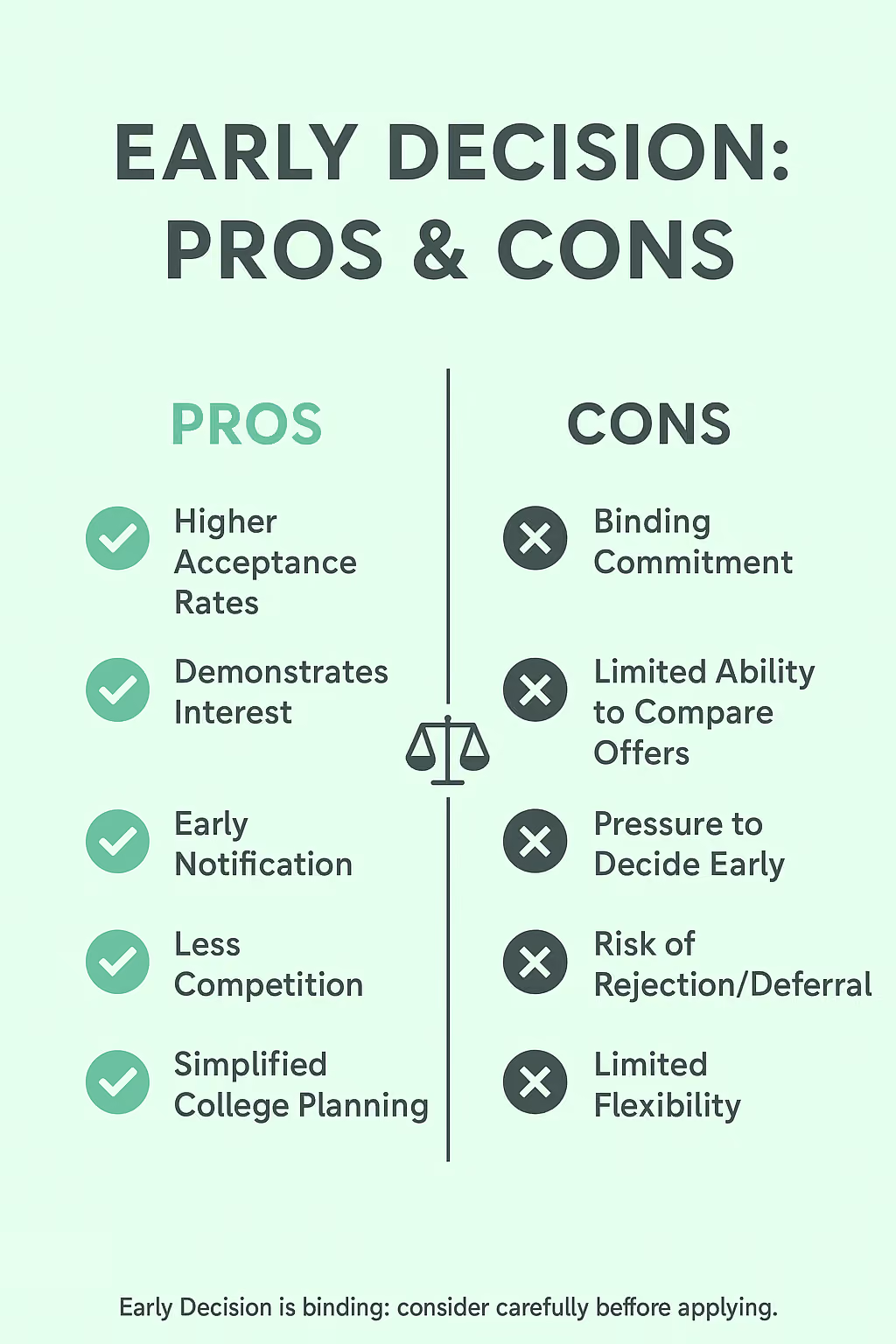
How ED2 Affects Financial Aid and Merit Scholarship Opportunities
Financial Aid Considerations
- Students applying for ED2 can often request need-based financial aid, just like Regular Decision applicants. However, the financial aid package is generally provided after a student is accepted. Many schools typically aim to meet demonstrated need, but applicants have less opportunity to compare offers from multiple institutions because acceptance commits them to enroll.
- Families should carefully calculate their Student Aid Index and be prepared to accept the aid package as offered.
Merit Scholarships
- Not all schools consider ED2 applicants for merit scholarships, although this varies by institution. Some schools do allow ED2 students to apply for awards, but opportunities may be more limited.
- Be sure to check each school’s scholarship policy to understand deadlines and eligibility.
Closing Insights
Participating in Early Decision 2 can be an amazing opportunity to get your foot in the door at a great school that’s the right fit. Do your research, ask the important questions, and plan for the path that’s best for you. So, if you're feeling confident in your choice and comfortable with the commitment, then ED2 might just be your track to success. Apply away!
If you are interested in applying to early decision, you need to build a strong foundation in your academic portfolio. With Indigo’s 1:1 Mentorship Programs, high school students work closely with university mentors who help turn concepts into meaningful projects. By completing the program, you gain practical research experience and a stronger, more compelling college application.