

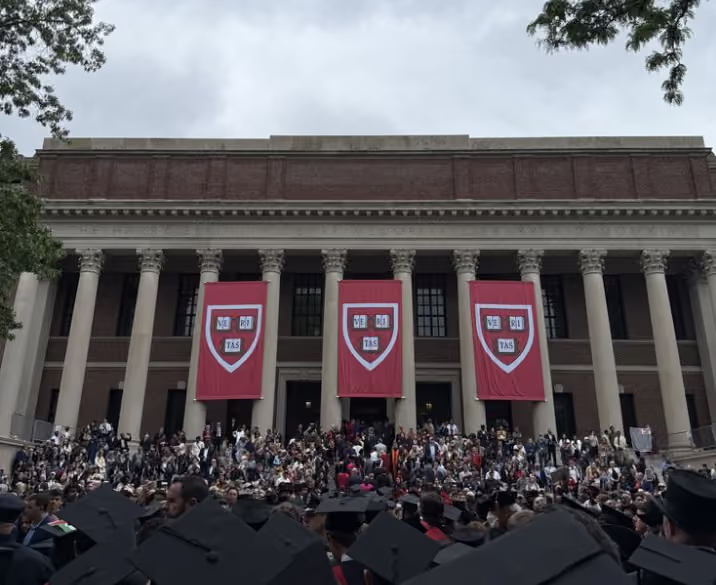
Harvard at a Glance
Harvard University is one of the most well-known and influential schools in the world, ranked #3 in the U.S. News Best National Universities and #5 in the QS World University Rankings. For many students, it is the ultimate college dream, offering world-class academics, research opportunities, and a strong global network. At the same time, Harvard comes with real challenges, including a highly competitive environment, high cost of living, and the pressure of standing out among other top students. It is not the right fit for everyone. If you are thinking about applying in 2026, this guide breaks down the pros and cons so you can decide whether Harvard is the right choice for your personal, academic, and career goals.
Why Is Harvard So Prestigious in 2026
Harvard’s prestige comes from a mix of history, influence, and strong academics. Founded in 1636 and named after its first benefactor, John Harvard, it’s the oldest higher education institution in the U.S., and its traditions continue to shape universities worldwide.
The university has produced eight U.S. Presidents and numerous Nobel laureates, and it consistently ranks among the top schools globally. As a cornerstone of the Ivy League, Harvard attracts some of the brightest students and scholars from across the globe, making it a symbol of academic excellence in 2026 and beyond.
Key prestige factors:
- Founded in 1636, the oldest university in the United States
- Part of the Ivy League
- 161 Nobel Prize winners affiliated with Harvard
- 359 Rhodes Scholars
- QS World University Rankings: #5 (2026)
- U.S. News & World Report: #3 national universities
- Academic Reputation score: 100/100
- Employer Reputation score: 100/100
- Employment Outcomes score: 100/100
These metrics explain why so many students ask whether Harvard is worth it.
Harvard’s Admissions Process and Selectivity
Admission to Harvard is famously competitive. For the Class of 2028, more than 54,000 students applied, and only about 1,970 enrolled. The acceptance rate typically falls between 3 percent and 4.9 percent.
Harvard uses a holistic admissions process and offers a Restrictive Early Action (REA) option for early applicants. The university also practices need blind admissions for domestic students.
Admissions highlights:
- Acceptance rate: 3 to 4.9 percent
- 54,000+ applicants (Class of 2028)
- 1,970 enrolled students
- Student-to-faculty ratio: 7:1
- 18 percent international students
- Students from 80+ countries
Harvard’s undergraduate division, Harvard College, is the primary entry point for first-year students.
Below is the acceptance data amongst the Ivy League schools for the class of 2028. As you can see, Harvard has the lowest acceptance rate of the eight, further showcasing the competitive nature of the prestigious school.
The True Cost of Attending Harvard University
Harvard has a reputation for being expensive, but many families pay far less than the sticker price. The total cost of attendance for the 2025 to 2026 academic year ranges from about $86,926 to $87,926.
Financial aid plays a huge role in making Harvard accessible. The university has one of the most generous need-based financial aid systems in the world.
Harvard’s Need-Based Blind Admissions and No-Loan Financial Aid Policy
One of Harvard’s biggest pros is its financial aid philosophy. The university promises to meet 100 percent of demonstrated financial need, which removes many barriers for students from lower-income backgrounds.
Harvard offers need-blind admissions, meaning a student’s ability to pay tuition is not considered during the admissions process, and meets 100% of demonstrated financial need through grants rather than loans. Its no-loan policy ensures students can graduate without debt.
Financial aid benefits:
- Tuition is free for families earning under $100,000, and fully covered for families under $200,000 under the no-loan policy
- About 55% of students receive need-based financial aid
- The average net price for those receiving aid is around $19,500
Academic Excellence Across Harvard’s Schools and Programs
Harvard offers an enormous range of academic opportunities. Students can choose from more than 50 undergraduate concentrations and over 3,700 courses.
The university also includes some of the most prestigious graduate schools in the world.
Major Harvard schools include:
- Harvard Business School (HBS)
- Harvard Law School (HLS)
- Harvard Medical School (HMS)
- Harvard Kennedy School (HKS)
- Harvard Griffin Graduate School of Arts and Sciences
- John A. Paulson School of Engineering and Applied Sciences (SEAS)
- Harvard T.H. Chan School of Public Health
Academic features:
- House tutorials and seminars
- Blocking groups of up to eight students
- Tiered tuition structure for PhD students
- 97% graduation rate
- 99% retention rate
The Residential House System and Student Life Experience
Harvard’s residential system is one of its defining features. Nearly all students live on campus, and most are assigned to one of twelve residential houses.
These houses create tight communities and offer mentorship from House Tutors and Resident Deans.
Student life highlights:
- Housing Day
- Housing lottery
- Blocking roommate selection process
- InterHouse Transfer process
- Cultural Rhythms festival
- Dudley Community for off-campus students
Students can also join more than 470 student organizations and 42 Division I varsity sports teams.
Campus Location and Living in Cambridge, Massachusetts
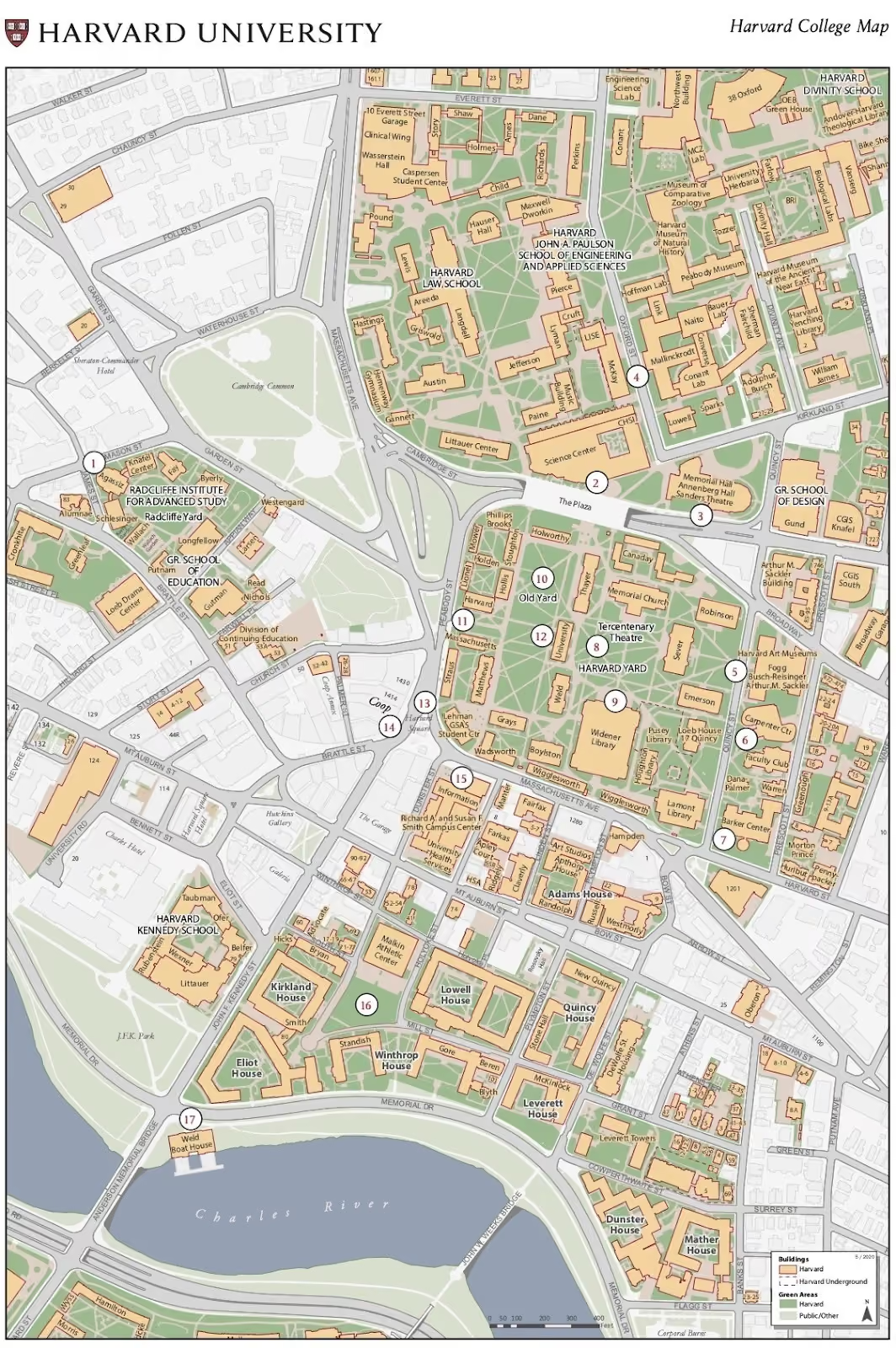
Harvard’s campus sits in Cambridge, Massachusetts, directly across the river from Boston. The university’s historic center is Harvard Yard.
Nearby Harvard Square is a hub for restaurants, bookstores, and student life.
Key campus locations include:
- Annenberg Hall
- Memorial Church
- Widener Library
Harvard’s library system contains more than 18 million volumes, making it the largest academic library system in the world.
Career Outcomes and Post-Graduation Success
One of Harvard’s biggest advantages is its career outcomes. Graduates often secure high-paying jobs across industries.
Career data highlights:
- Median graduate salary: $99,572 (six years after graduation)
- Computer science graduates: $140,072
- MBA median base salary: $184,500
- 40 percent earn more than $110,000 starting salary
Harvard’s alumni network includes more than 371,000 graduates across 190 countries.
Additional career metrics:
- 62 living billionaire alumni
- 161 Nobel Prize winners
- 359 Rhodes Scholars
Career resources come from organizations like the Office of Career Advancement and the Institute of Politics.
The Competitive Atmosphere and Academic Pressure
Harvard’s environment can be extremely demanding. Many students thrive in this competitive atmosphere, but it can also be overwhelming, and it’s not for everyone.
Common academic challenges:
- Heavy workloads
- Difficulty standing out among peers
- Limited access to some competitive concentrations
- Pressure to secure internships
The university’s Presidential Public Service Fellowship encourages students to pursue public service careers.
Social Exclusivity and Final Clubs Culture
Harvard has a complex social landscape shaped by tradition and exclusive organizations.
Examples include:
- Final clubs like Porcellian and Bee
- Hasty Pudding Club
- Signet Society
Some students appreciate the networking opportunities these groups provide. Others criticize them for reinforcing social exclusivity.
Harvard’s student newspaper, The Harvard Crimson, often reports on these debates.
Grade Inflation and Standing Out Among Elite Peers
Harvard has been associated with grade inflation, as many students receive high grades, which can make academic distinction more difficult.
While being surrounded by extremely talented peers can be highly motivating for some, it can create imposter syndrome and self-doubt for others.
Challenges students report:
- Feeling academically average among exceptional peers
- Pressure to maintain perfect grades
- Alumni network expectations
Access to Resources and World-Class Facilities
Harvard offers extraordinary research and entrepreneurship resources.
Important research centers include:
- Harvard Innovation Labs
- Radcliffe Institute for Advanced Study
These institutions support student research, startups, and interdisciplinary projects.
Mental Health Challenges and Imposter Syndrome
Even with strong support services, Harvard’s intense academic culture can affect mental health. Students sometimes struggle with stress, anxiety, and imposter syndrome.
Support systems include:
- Counseling services
- Residential house mentors
- House Tutors and Resident Deans
The Drawbacks of Large Introductory Classes
While many upper-level classes are small seminars, introductory courses can be large lectures, and not ideal for every learner.
Potential drawbacks:
- Limited professor interaction
- Hundreds of students in lecture halls
- Reliance on teaching assistants for discussion sections
International Student Experience and Work-Study Limitations
Harvard attracts students from more than 80 countries, creating a diverse academic community.
However, international students may face some limitations.
Common challenges:
- Work study restrictions for non-US students
- Visa regulations
- Cultural adjustment
Despite these challenges, most international students do report strong academic and social experiences.
FAQ
Is Harvard better than Oxford?
Both universities are world leaders. Harvard offers broader professional networks, while Oxford uses a tutorial system with very small classes.
Which is better, Harvard or Princeton?
Harvard has a larger alumni network and more graduate schools. Princeton focuses heavily on undergraduate education.
Is Harvard Square part of Harvard University?
Harvard Square sits next to campus but is not officially owned by the university.
Is Harvard safe?
Cambridge is generally safe, and Harvard University maintains its own campus security system.
What is Harvard University good for?
Harvard is known for research, leadership training, and strong global career outcomes.
How does Housing Day work at Harvard?
During Housing Day, first-year students learn which residential house they will join.
What is Restrictive Early Action (REA)?
REA allows students to apply early to Harvard, but restricts applying early to other private universities.
Can you transfer between residential houses?
Students can apply for a residential housing transfer through the InterHouse Transfer process.
Compare more IVY League universities and check out Indigo’s blogs featuring the pros and cons of Columbia University and the pros and cons of Duke University. Students interested in joining Harvard’s research-driven academic environment can benefit from completing an independent research project.
Programs like Indigo Research help students build research skills and develop original work that strengthens college applications. Participants in Indigo programs have shown a 3.14x higher acceptance rate to Ivy League universities than the global average!





.jpeg)